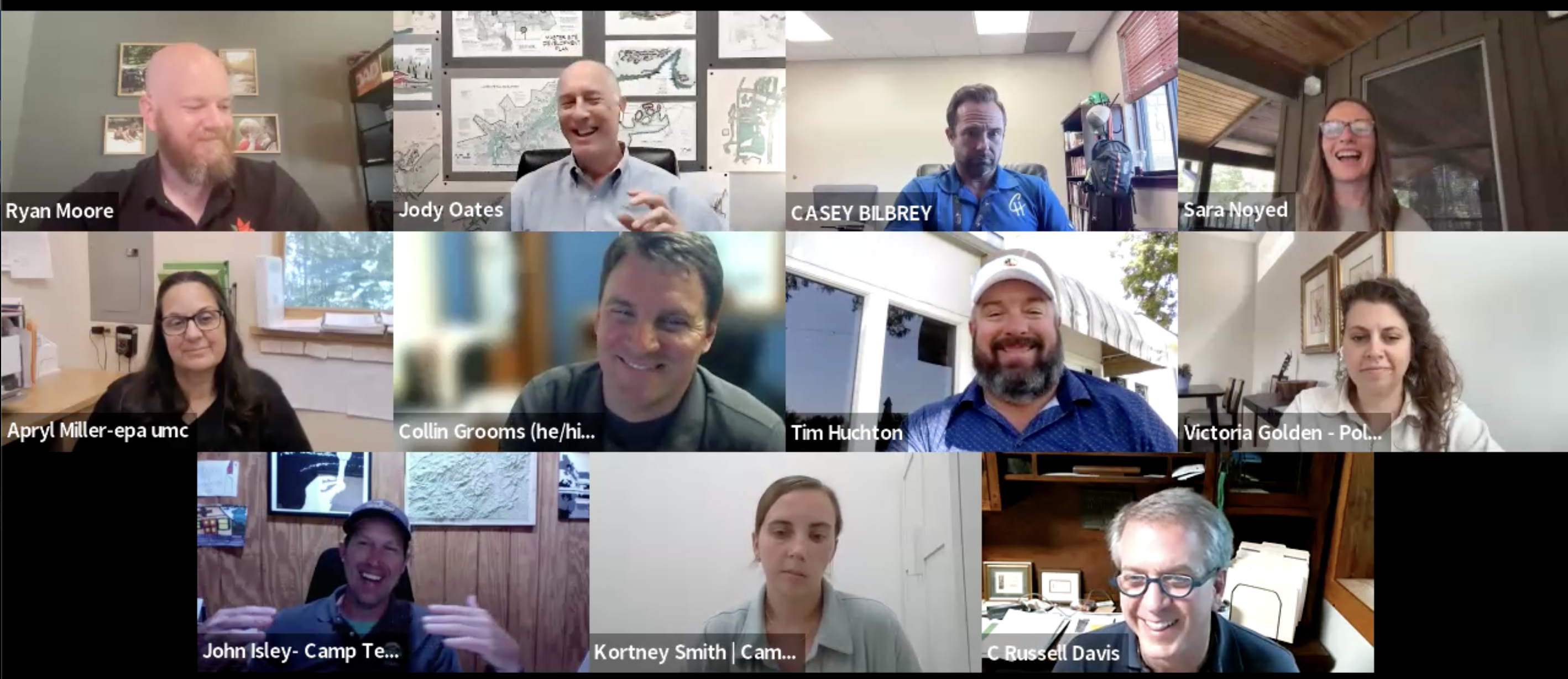

Earlier this fall, Kaleidoscope invited a small group of respected camp and retreat leaders into a candid conversation about the season of leadership they are navigating today. The group represented a range of organizational sizes, models, geographic regions, and leadership contexts, but they shared something important in common. Each is actively leading through change while trying to position their organization for a healthy future.
As we reflectedon the conversation, four insights rose to the surface.
The years following the pandemic have created a quick succession of seasons for camp leaders. In 2020-2021, most camps ceased or dramatically limited operations. From 2022-2024, camps measured recovery against 2019. But since 2025, and especially today, that comparison is less useful.
The environment has changed too much. Supporting organizations such as churches, scouting groups, YMCAs, and other member-based institutions are shifting. Staffing, food, facilities, insurance, and construction cost more. Parent expectations have changed. The level of trust required to send a child away to camp has changed.
The challenge is that this new normal does not yet have clear benchmarks. Old measures of health like camper registrations or retreat bookings may not mean what they once did. Leaders need to move from asking, “How do we get back to where we were?” to asking, “What does health look like now?”.
The exhaustion described in the conversation was about more than a long summer. Leaders are carrying the impact of natural disasters, changing regulations, more complex risk management, rising expectations, and changing staff needs. Front-line employees often require more intentional onboarding, training, and support, which is good and necessary, but it can also place more responsibility on senior leaders.
Boards are part of the equation too. In some organizations, volunteer boards are not yet carrying the strategic and fiduciary responsibilities the organization needs from them. When governance, staffing, and systems are not strong enough, the executive leader becomes the place where every gap lands.
This is not just a wellness issue around preventing burnout. It is an organizational structure issue.
In a more complicated environment, clarity becomes a competitive advantage. Healthy organizations know who they are, why they exist, what they are trying to accomplish, and what deserves their attention. That matters because leaders are being presented with more opportunities (and challenges) than they can reasonably pursue or address.
Most camps have learned this in a marketing sense: in an increasingly complex world of choices for youth and families and with a shrinking capacity of an audience to hear and internalize your message, organizations mush have razor-sharp clarity about their programs and outcomes.
But this season requires that same clarity inside the organization. Clarity helps an organization decide what to build, what to fund, who to serve, what programs to grow and sometimes most importantly, what not to do right now.
Critically, this organizational clarity around identity, action steps, goals, and programs also has to be shared. When staff, board members, and key stakeholders understand the organization’s priorities and their role in achieving them, those priorities become a common rubric for decision-making.
The added complexity means that what is urgent can tend to crowd out what is important. But true sustainability cannot be achieved with reactionary leadership. Importantly, sustainability goes beyond finances. It includes healthy staffing, realistic program models, cared-for facilities, sound governance, and systems that do not depend on one person holding everything together.
Leaders (both staff and board) who remain buried in immediate problems can easily move from one crisis to the next without addressing what is underneath. Forward-looking leadership means planning early enough to have choices.
The organizations best positioned for the future will be the ones that can manage today while still looking several years ahead. In some cases, that means moving before the crisis is too steep and that takes courageous leadership.
The challenges are real, but so is the opportunity. Camp experiences are a critical resource for youth and families today. These are places where young people grow up, discover more of who they are, and learn how to live in community. In a time when connection, belonging, resilience, and trusted relationships matter deeply, the work of camp is essential.
We also remain convinced that camp leaders are some of the most creative and resilient leaders anywhere. We see that in this group and in the organizations Kaleidoscope works with every day. Many are not simply recovering from challenges. They are strengthening governance, reshaping staffing, clarifying identity, investing in facilities, and building toward what comes next.
The future will not look like even the best days of the past. For camps and centers willing to gain clarity, look ahead, and adapt thoughtfully, that creates real opportunity.
In future blog posts, we plan to expound on some of the ideas in this summary, identifying key areas of challenge and opportunity for camps and their leaders. To stay in the loop with what’s happening, follow us on social media and sign up for our newsletter.